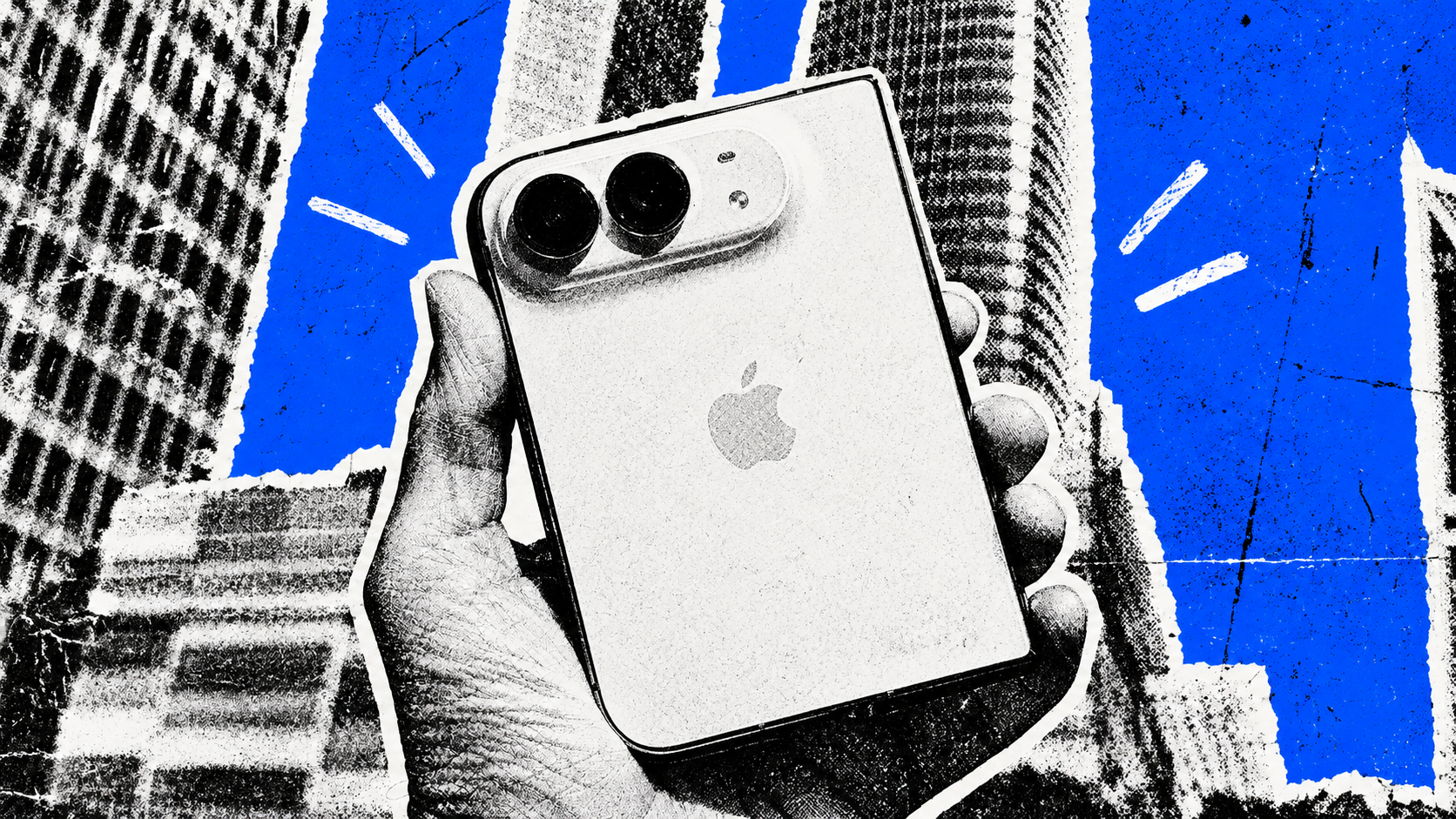


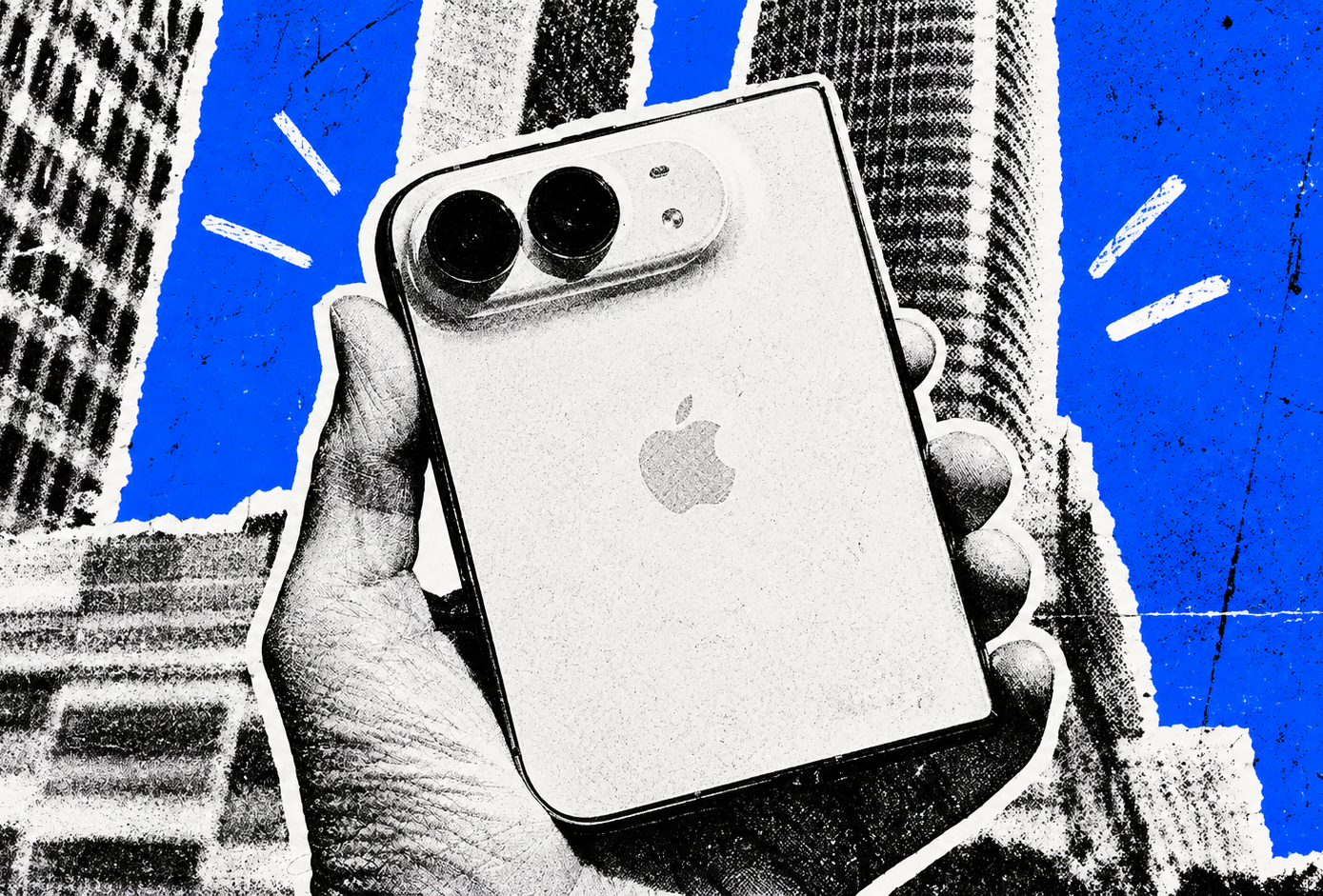
If the iPhone Duo was a pop song, it would be "A Beautiful Mess" by Jason Mraz.
Apple's first foldable phone is submerged in contradictions. It's full of quirks, little imperfections, and unfinished bits that are clearly still a work in progress. And yet it's also incredibly charming and a joy to hang out with.
So here we are.
I noted earlier this year that foldable phones might be the best phones for AI enthusiasts who are regularly running lots of AI agents because they give you extra screen real estate for monitoring and managing those agents.
And with many of the leading AI apps on mobile now supporting the ability to look after the desktop apps where you agents are running, AI builders can be a lot less tethered to their computers. The situation had gotten so comical earlier this year that it wasn't uncommon to see developers walking around the streets of San Francisco and New York with their laptops open because they didn't want to close the lids and stop their agents from working.
But no more. If you were an Android user, you could opt for the Samsung Z Fold 8, the Pixel 11 Pro Fold, or one of the very capable Chinese foldable phones. But if you were an iPhone user you didn't have a foldable option to level up your mobile AI experience until now.
So how well does Apple deliver with its foldable? And is the iPhone Duo a good phone for running AI?
The first question is mostly about the hardware. Not surprisingly, Apple delivers here, but it's not perfect. The device is very well engineered. The larger inner matte display might be the best screen on any Apple device. It is bright, colorful, repels fingerprints, and hides the crease to make the screen always feel like a single screen rather than two different displays glommed together. And of course, it has Apple's latest A20 Pro chip with its dual 16-core Neural Engine that powers through AI and ML workloads, including running 4B parameter models locally.
The challenges are that the device is quite heavy to hold and it gets especially thick when you put a case on it. And I would absolutely recommend a case for this $2,000 device that is quite smooth and slippery to hold. I would love to see Apple make future versions with a more grippy finish on the sides and the back. Also, this is not the Z Fold 8, or last year's Z Fold 7 for that matter, which are both essentially the same width as a normal flagship phone when closed. You won't mistake the iPhone Duo for a normal phone at any point. But Samsung's hardware shows what's possible for future versions.
The second question, about being an AI phone, comes down to the software experience. And this is where the iPhone Duo really shines, but it's also where its rough edges and incomplete bits show the most. The passport form factor produces excellent symmetry where apps use the same dimensions on the outer screen and the inner screen, making them easier to adapt. The challenge is that the apps still need to be optimized and well thought out for user experience, and many aren't—including many of Apple's own apps as well as other important third-party apps that many people rely on every day such as calendar and messaging apps.
Many of the apps are not yet optimized for Apple's new interface element on the Duo, the dock along the right side, and so they end up leaving a large black bar along the side, which looks awkward and wastes screen space. The new dock itself is quite well thought out and is a great place to quickly access settings, buttons, and status icons. But it can also get confusing when things show up in there that you're used to seeing in other places in iPhone apps. Nevertheless, these are nearly always improvements on the Duo and are easy to get used to with time, which I found to be a common theme of the device experience.
Our Deeper View
The iPhone Duo is the riskiest thing that Apple has done since the Vision Pro. Apple really let its hair down and went cliff diving on this one. That's why there are so many wildly divergent opinions about it and plenty of things that people don't like because it changes so many things about the iPhone experience. That's pretty uncomfortable for a device that is so widely used and has had a pretty consistent experience for most of two decades. Some are even calling it more like a folding iPad for your pocket, because the experience is so different from an iPhone. But this device is thoroughly an iPhone. It's just an iPhone with a larger screen and a lot of interface changes, some hardware decisions that still need to get sorted out (like where to put the buttons), and missing features (like the latest cameras and Face ID). In time, all of those things will get sorted out. But if you're looking for the best iPhone to manage your agents and run the latest AI features, this is the one.